DCI Engineers provided the mass timber structural engineering for Bush Middle School, a new middle school building for The Bush School in Seattle, Washington, and contributed to a newly published WoodWorks case study featuring the project.
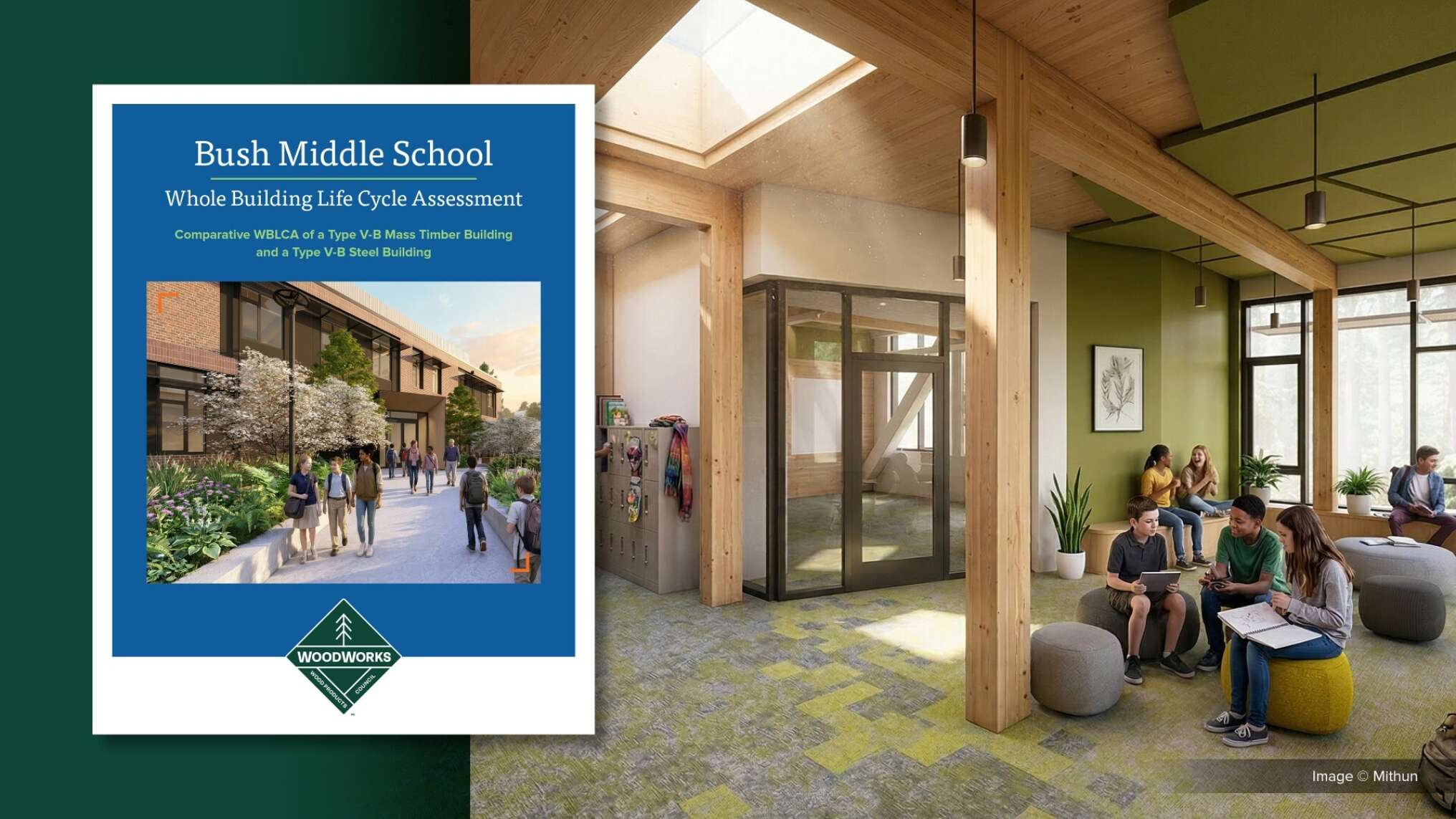

The case study examines how our comparative whole building life-cycle analysis verified early material selection decisions—specifically the choice between composite steel and mass timber framing above a partial steel podium—to shape the building's environmental performance. It offers a direct, project-based look at how structural systems influence embodied carbon outcomes, and what that means for teams pursuing ambitious sustainability targets.
Utilizing mass timber helped achieve significant embodied carbon savings compared to a functionally equivalent steel structure, while also creating a better learning environment for students through biophilic design benefits and improved indoor air quality. Those outcomes, combined with the project's net-zero carbon and Salmon-Safe certification goals, made mass timber the clear choice from both a structural and sustainability standpoint.
Bush Middle School is a ~25,700-sf, two-story mass timber structure designed in collaboration with Mithun and Venture General Contracting.
Read the full case study to explore the side-by-side comparison and the team's approach to sustainable structural design.